Athletic Posture: Building a Swing-Ready Body
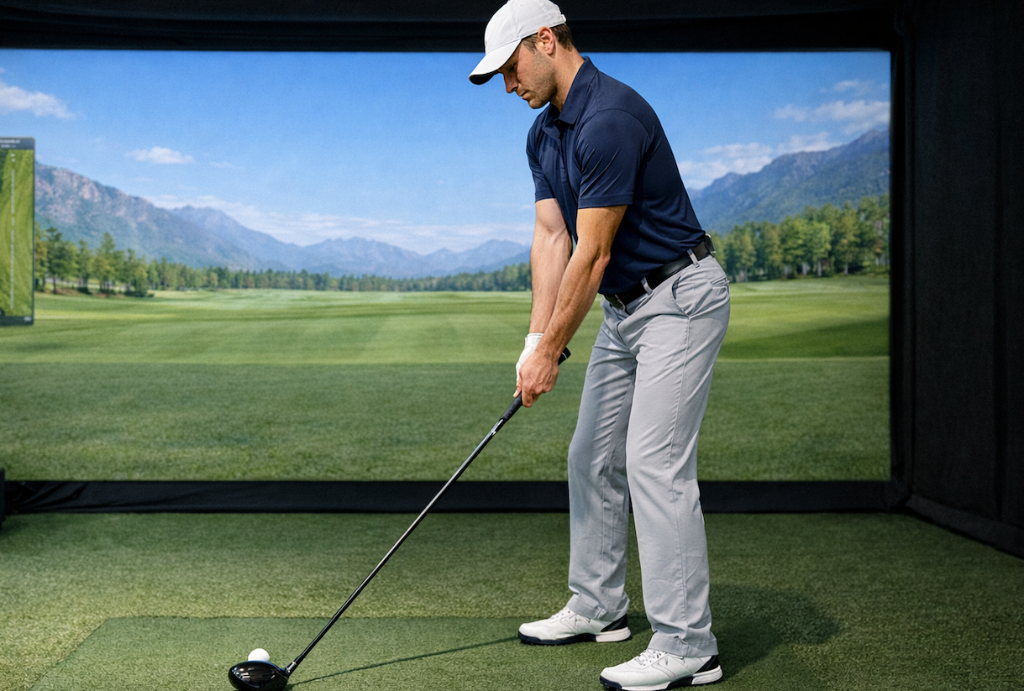
Let's talk about posture — because this is one of those things in golf that looks simple, but quietly affects everything you do in the swing.
Golf isn't a static sport. You're not posing for a picture. You're moving. You're rotating. You're transferring energy through the ground, up through your body, and into the club. And posture is what allows all of that to happen efficiently.
Here's the important part most players miss: good posture doesn't mean stiff. It doesn't mean locking in and holding tension. Good posture means ready.
If you think about other athletic movements — shooting a basketball, fielding a ground ball, even getting ready to sprint — the body always looks balanced, relaxed, and prepared to move in any direction. Golf posture works the same way.
When you set up to the ball, your feet should be about shoulder-width apart. Your knees have a little softness to them — not bent like you're squatting, just unlocked. From there, you hinge forward from your hips, not your lower back. That's a big distinction. Your spine stays relatively neutral, your chest stays tall, and your shoulders relax down naturally. If you let your arms hang, they should fall comfortably beneath your shoulders without you having to reach or pull them in.
When you're in this position, something important happens. Your body is balanced. Your muscles are engaged, but not tense. And most importantly, you've given yourself the freedom to rotate.
This matters more than most people realize.
Biomechanical research and modern coaching both show the same thing: players with sound posture rotate more efficiently, protect their lower back, and deliver the club on more consistent paths. When posture breaks down — when someone hunches over too much, locks their knees, or arches their lower back — the body has to compensate. And those compensations usually show up as early extension, inconsistent contact, or a loss of speed and power.
One of the most important concepts here is the hip hinge.
A lot of golfers bend from the waist by rounding their back. That puts stress on the spine and limits rotation. What you want instead is a hinge at the hips. Think of your hips gently pushing back as your upper body tilts forward. Your spine stays long. Your core stays engaged. This creates space for your body to turn without strain.
If you've ever finished a range session and felt soreness in your lower back, there's a good chance posture — not your swing mechanics — was the real issue.
Now, here's another key point: posture isn't something you set once and then forget about.
Posture is dynamic.
At address, you're building a starting position. But during the swing, good players maintain posture through rotation. They don't stand up through impact. They don't collapse down toward the ball. Their chest stays over the ball, their hips rotate, and their spine angle remains relatively stable as the club moves through impact.
That ability doesn't come from forcing positions. It comes from awareness and repetition. Feeling balance. Feeling rotation. Letting the body move athletically instead of trying to hold a pose.
So if there's one takeaway here, it's this: posture isn't about looking perfect. It's about giving your body permission to move well.
Get into a position that feels athletic, balanced, and ready — and let the swing build from there.